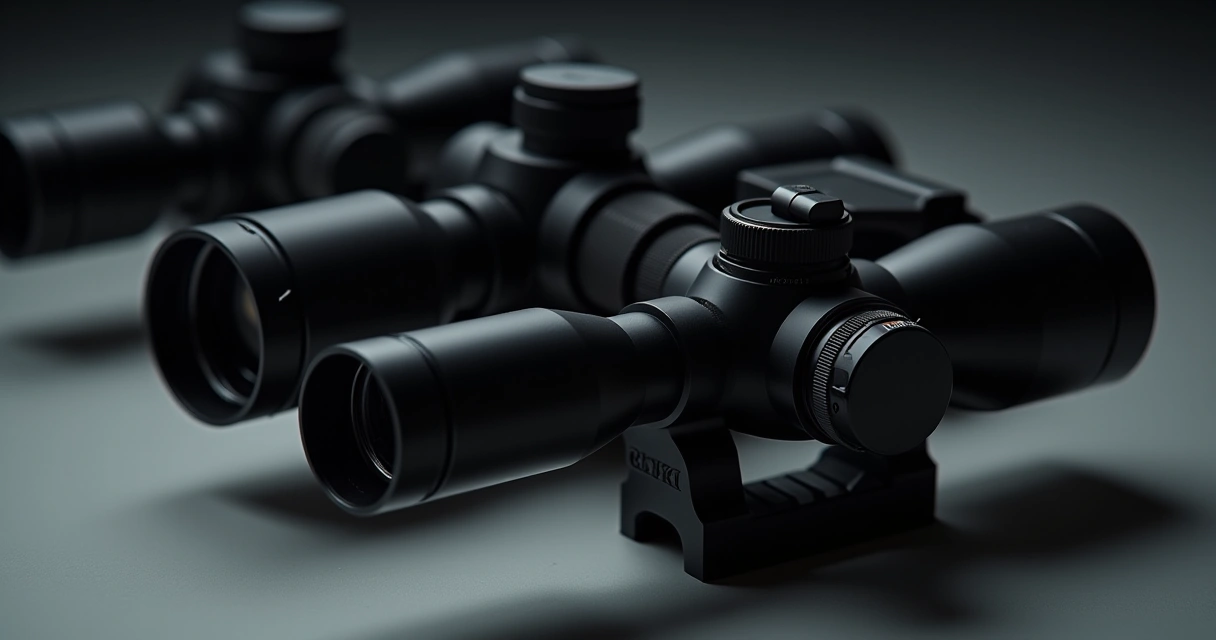
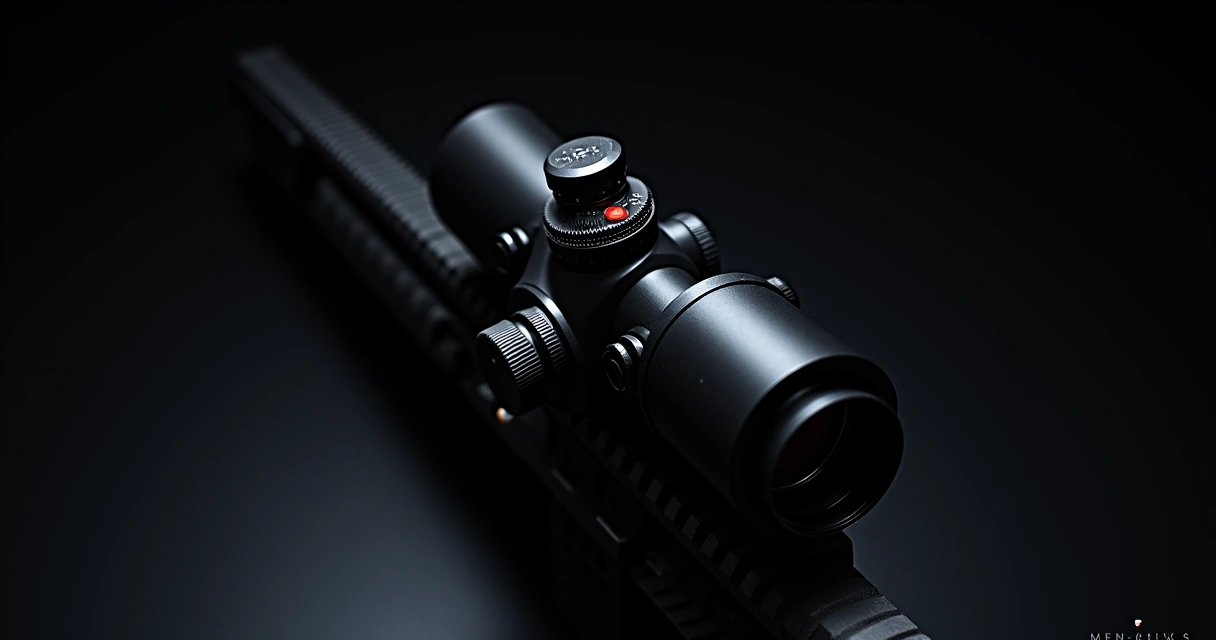
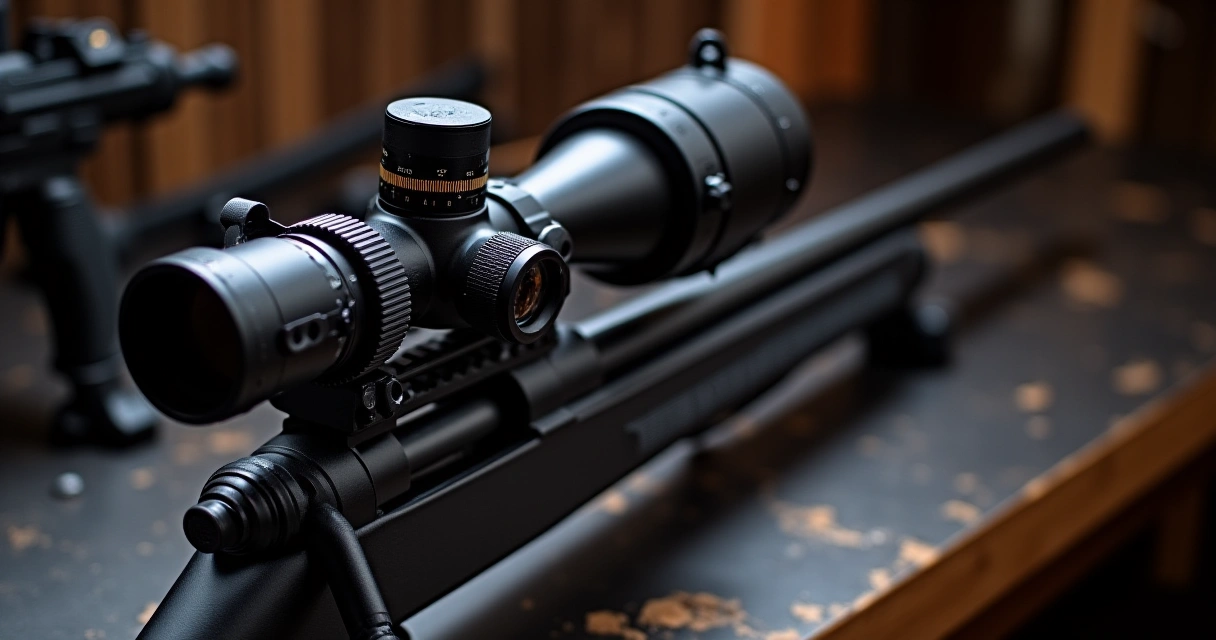
What to Look for When Buying a Rifle Scope
What to Look for When Buying a Rifle Scope
A rifle scope is the single most important accessory you'll buy after the rifle itself. Get it wrong and you'll spend thousands on a great gun, only to handicap it with optics that fog in cold weather, track inconsistently, or make it impossible to see game at dawn. Get it right and a quality scope becomes invisible—you stop thinking about the glass and start thinking about the shot.
I've spent the last fifteen years testing scopes in every condition that matters: subzero whiteout hunts, blazing desert competition, wet PNW forests, and 600-yard target work at altitude. I've also seen good shooters waste money on premium brands with fatal flaws and budget optics that punch way above their price. The difference isn't always what you'd think. This guide cuts through the marketing and tells you exactly what separates a scope worth owning from one that'll disappoint you in the field.
Table of Contents
Optical Quality and Glass Clarity
The first thing you notice when you look through a premium scope versus a budget scope isn't always obvious at noon indoors. It becomes painfully clear at first light or last light—that golden hour when animals move and light disappears fast. Good glass transmits more light. Bad glass loses it to reflections, poor coatings, and cheap lens elements that scatter photons instead of focusing them.
What you're actually evaluating is lens coating quality and optical design. A well-coated objective lens on a $600 scope will outperform a poorly coated $2,000 scope in low-light conditions. I've spent dawn after dawn comparing scopes side-by-side, and the difference shows up immediately: contrast, edge clarity, and color rendition. A poor scope will wash out detail. A good one will let you count points on a distant buck's antlers when commercial scopes can't even resolve his body.
Test for glass quality in the store or ask the retailer if you can take it outside. Look through the objective end at a light source without the rifle mounted—you should see a golden or amber reflection. Purple or rainbow reflections indicate cheap multicoating. Look at high-contrast objects like a tree against sky: the edges should stay sharp and the colors should remain true. The worst offender I've tested was a major brand's $800 scope that made everything look slightly yellow. That's not a feature. That's poor glass.
Reticle Design and Functionality
A reticle is not just a crosshair. It's a ballistics calculator, a distance-estimation tool, and your aiming point all rolled into one. The right reticle makes you faster and more accurate. The wrong one makes you slower and second-guess every shot past 200 yards. I've seen shooters hobble themselves for years using a simple duplex reticle when a proper tactical reticle would have cut five seconds off their solution time.
The basic question is: what do you actually need to do with this scope? If you're hunting at ranges you can count on one hand (under 300 yards), a simple duplex crosshair works fine. If you're pursuing long-range precision—whether competitive shooting or hunting at distance—you need a reticle with windage and elevation holds. Modern reticles like MOA-based designs (mil or MOA subtensions) let you dial once and hold multiple distances without re-zeroing. Some shooters prefer turret adjustments; others prefer holding. Neither is objectively better, but your reticle must support your chosen method.
Watch out for reticles that look good on paper but fail in practice. Heavy reticles that cover too much of your target waste sight picture. Incredibly fine reticles disappear in poor light. Center dots that are too thick will obscure vital zones at distance. I tested a well-reviewed scope last year with a reticle so fine that at dawn, when I needed to see it most, I couldn't even distinguish the crosshair. It's beautiful in a showroom. It's useless when the light's failing and you've got a thirty-second window to make the shot.
Magnification, Objective Size, and Realistic Use Cases
Magnification is where I see shooters make their costliest mistakes. More magnification sounds better. It isn't. High magnification narrows your field of view, makes your rifle harder to handle in close quarters, and amplifies mirage and wind effects that make precision impossible. Too much magnification is a handicap. I've watched experienced hunters miss close opportunities because they couldn't locate their target in a high-power scope's tunnel-vision sight picture.
What magnification do you actually need? Hunt under 300 yards, 4x works. Hunt out to 400 yards, 6x-8x is appropriate. Precision shooting past 600 yards, 12x-15x. Beyond that, you're wasting money unless you're intentionally pushing further. A quality 3-9x40 or 4-12x50 is more versatile than a fixed high-power scope—you can zoom down for closer work and zoom up when range stretches out. The objective size (that 40 or 50 in those specs) matters less than glass quality, but larger objectives do gather more light at high magnification. A 4-12x50 will be brighter at 12x than a 4-12x40, particularly at dusk. The tradeoff is weight and scope diameter.
Here's what I see with fresh shooters: they buy the 6-24x scope thinking they'll grow into it. Then they never learn proper technique at lower magnification because they're always maxed out trying to see something. Buy the magnification your actual shooting demands, not the magnification you think you'll someday need.
Mechanical Reliability and Tracking
A scope is a precision instrument with moving parts. The turrets must click consistently. The elevation and windage adjustments must track predictably—meaning if you dial 10 MOA up, your point of impact must move exactly 10 MOA up every single time. This is not negotiable. A scope that won't track reliably is fundamentally broken, no matter how good the glass is.
Test tracking on the range, not at home. Fire a shot at a known distance. Make a precise adjustment on your turrets—say, exactly 3 MOA right. Fire again. The bullet should move right by exactly 3 MOA. Do this five times in different directions. Premium scopes will track perfectly. Budget scopes sometimes have inconsistent turret clicks or internal slippage that will cost you shots. I once tested a highly rated budget scope and discovered it lost zero between days—not repeatable tracking, but actual mechanical failure. The retailer's warranty replaced it, but the first one was a lemon. That's why you test on the range.
The durability of the turret mechanisms also matters. Some scopes use soft turrets that damage easily if you catch the turret cap on a pack strap. Others use sealed turrets that will hold zero for years even if you abuse them. For hunting, sealed or semi-sealed turrets are safer—you won't accidentally bump a turret and lose zero thirty miles from camp. For competition where you're intentionally dialing frequently, look for smooth, confident clicks and positive audible feedback. Mushy, uncertain clicks wear you down and introduce errors.
Durability, Warranty, and Real-World Abuse Testing
A rifle scope is going to get wet. It's going to get knocked around. It's going to sit in a hot truck bed, get thrown in a backpack, and possibly take a hard fall. The question isn't if it'll get abused—it's whether it'll survive the abuse and still shoot straight. I don't trust a scope until I've seen it hold zero after a hundred-mile mountain hunt, not just after a range session.
Glass quality doesn't guarantee durability. I've used expensive scopes with excellent optics that fogged internally after one wet hunt. Cheap scopes with questionable glass that never fogged. The difference is sealing. A properly sealed scope uses O-rings, argon gas, or nitrogen filling to prevent moisture ingress. When you see fog forming on the inside of the lenses, the seal has failed—the scope is now compromised and potentially worthless. Check whether a scope is sealed, not just whether it claims water resistance. There's a difference between "water resistant" and "fully sealed with purged internals."
Warranty matters because it tells you what the manufacturer is willing to stand behind. Lifetime warranties aren't always better—they're often vague about what they cover. A limited lifetime warranty that explicitly covers turret accuracy, lens coating failure, and impact damage is more trustworthy than an unlimited warranty that covers nothing. Read the fine print. Some manufacturers won't warranty a scope dropped from a height. Others will replace it no questions asked. That gap matters in the field.
I've tested scopes at temperature extremes that matter to actual shooters: high-altitude hunts where temperature drops 30 degrees in an afternoon, desert hunts where it swings 50 degrees between dawn and dusk. Cheap scopes sometimes shift zero with temperature change. Quality scopes hold it. This is testable if you're patient—shoot a group at ambient temperature, leave the rifle in a freezer or oven for two hours, and shoot again. Temperature-stable scopes won't shift. Cheap ones will surprise you.
Mounting, Eye Relief, and Practical Ergonomics
A premium scope on a poor mount is money wasted. The mount has to keep your scope rigid, allow repeatable zero, and be compatible with your rifle and intended use. Picatinny rails are the modern standard—most rifles and mounts use them. If your rifle doesn't have a rail, you'll need either a rail attached via dovetail or an older two-piece mount. Whatever system you use, test that the scope stays mounted after recoil. A scope that shifts zero between range sessions is failing at its one job.
Eye relief—the distance between your eye and the scope's eyepiece—matters far more than shooters realize. Too close and you get scope bite when recoil drives the scope rearward (particularly painful on large-caliber rifles). Too far and you lose the full sight picture and have to hunt for the reticle. Proper eye relief is typically 3–4 inches. For high-recoil cartridges or for shooters who want a forgiving setup, 3.5–4 inches is safer than 2.8 inches.
The eyepiece adjustment (focus) also matters. Some scopes use a simple eyepiece ring; others use a side-focus dial. For hunting, a simple eyepiece is fine—set