What to Look for When Buying Night Vision Optics
Our Top Picks
Affiliate disclosure: if you buy through these links, we may earn a commission at no extra cost to you.
Night vision optics have moved from military-exclusive territory into the civilian market, but the learning curve hasn't flattened one bit. There's real money at stake—quality night vision systems run $1,500 to $8,000+—and spec sheets alone won't tell you whether a unit will actually perform when you need it. I've tested dozens of monoculars, goggles, and weapon-mounted systems in actual low-light conditions, from hunting stands at legal shooting hours to competition events with artificially reduced lighting. The gap between what manufacturers claim and what you'll experience downrange is significant.
This guide cuts through the marketing noise. I'm not here to tell you which brand to buy; I'm here to teach you what separates a functional night vision rig from a glorified paperweight. If you're a hunter working coyote calls after sunset, a tactical shooter running low-light courses, or anyone serious about optics beyond daylight hours, pay attention to these criteria.
TOPDON TS004 Pro Thermal Imaging Monocular, 512 x 384 Thermal Optic
Check PriceCheck PriceA recovered top-picks entry restored from the saved product data for this article.
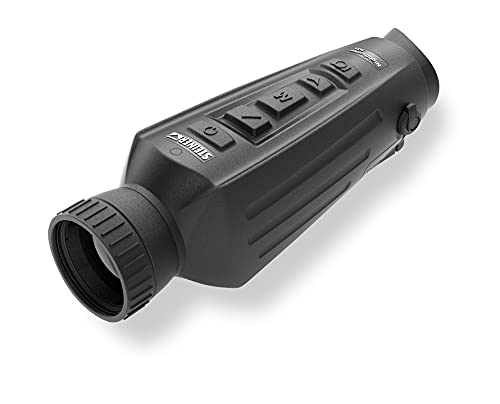
Steiner Nighthunter H35 Thermal Optic Handheld Scope with Quantum Vision Technology
Check PriceCheck PriceA recovered top-picks entry restored from the saved product data for this article.

AGM Global Vision Rattler Thermal Imaging Rifle Scope
Check PriceCheck PriceA recovered top-picks entry restored from the saved product data for this article.
Table of Contents
- Understanding Image Intensifier Tubes: The Core Technology
- Tube Generation and Performance Tiers
- Objective Lens Size and Light Gathering
- Resolution, Magnification, and Field of View
- Durability, Housing Quality, and Recoil Management
- Form Factor: Monocular vs. Binocular vs. Weapon-Mounted
- Frequently Asked Questions
Understanding Image Intensifier Tubes: The Core Technology
Night vision doesn't create light—it amplifies ambient light. Every night vision system relies on an image intensifier tube (IIT) at its heart. This tube collects photons from whatever light is available (starlight, moonlight, ambient urban glow) and multiplies them thousands of times, turning that faint signal into something your eye can actually process. The tube is also the most expensive component, which is why you'll see wildly different prices for seemingly similar-looking devices.
The tube's quality determines whether you're working with a sharp, crisp image or a dim, wavy, degraded picture. Bad tubes produce what I call "TV snow"—a grainy, low-contrast image that fatigues your eyes and makes target identification slow. Good tubes deliver high contrast with minimal noise. This isn't academic; in a hunting scenario, a poor tube means you'll misidentify distance and movement. In tactical training, it means slower target acquisition and poor shot placement diagnostics.
Tube age matters too. Tubes degrade over time. A tube manufactured in 2018 will perform measurably worse than one from 2023, all else equal. When shopping used or older inventory, ask for the tube's manufacturing date. Many vendors won't volunteer this—that's a red flag. If someone's selling a 2016 unit at 2024 prices, there's a reason.
Tube Generation and Performance Tiers
Night vision tubes are marketed by generation: Gen 1, Gen 2, Gen 2+, Gen 3, and Gen 3+. This is where real shooter confusion starts. Marketing departments have turned these generations into a muddled mess—vendors use "Gen 2+" and "Gen 3" inconsistently, and the military doesn't formally define these upper tiers, so there's regulatory gray area.
Gen 1 tubes are the cheapest option—$300–$800 per unit. I've tested them. In moderate ambient light (quarter moon, some starlight), they work. In truly dark conditions, they struggle. Gen 1 gives you a workable image maybe 80% of the time in field conditions, but that 20% where it fails is exactly when you needed it most. Unless you're exclusively hunting in moon-phase windows or training in lit ranges, Gen 1 is a compromise I wouldn't make.
Gen 2 tubes add a microchannel plate (MCP) that amplifies the signal further, improving low-light performance and image quality substantially. You're paying $1,200–$2,500 per tube, but you get usable image in starlight-only conditions. This is where most civilian hunters and sport shooters find their sweet spot. A quality Gen 2 unit will outperform a poor Gen 3 tube, so don't assume higher generation always means better.
Gen 3 tubes are the premium tier ($3,500–$8,000+), with gallium-doped photocathodes that extend sensitivity further into the infrared spectrum. If you're running constant low-light training, hunting year-round in heavily overcast regions, or operating in genuinely minimal ambient light, Gen 3 delivers measurable advantages. But you're paying for that advantage, and you need to use it consistently to justify the cost. I've seen too many shooters buy Gen 3 units and use them like Gen 2 would—they're wasting money.
Objective Lens Size and Light Gathering
The objective lens—the front lens that collects light—matters more than most shooters realize. Larger objectives gather more photons, which means better image quality in very low light. This is basic physics: a 51mm objective collects more than four times the light of a 25mm objective. But there's a cost: weight, bulk, and price.
For weapon-mounted systems, I recommend 40mm or larger objectives if you plan to use the system in truly dark conditions. A 40mm unit on a rifle is heavier than daylight optics, yes, but the performance gain in moonless nights is genuine. For handheld monoculars, size becomes a trade-off. A 51mm monocular is powerful but fatiguing to hold for extended periods. A 31mm is lighter and still capable in moderate low-light work. Think about your actual use case: Are you scanning terrain for an hour or making snap decisions in defense scenarios?
Lens quality also affects light transmission. Cheap coatings on large objectives waste the light-gathering advantage. Premium glass with quality multi-coated optics will outperform larger, poorly coated lenses. This is where you see the real quality divide between budget and premium units. A 40mm budget unit might transmit 75–80% of available light. A 40mm premium unit with superior coatings might hit 88–92%. In darkness, that difference is visible.
Resolution, Magnification, and Field of View
Resolution in night vision is measured in line pairs per millimeter (lp/mm) on the IIT. Higher resolution means sharper detail and better target identification. A 64 lp/mm tube will show you finer details than a 45 lp/mm tube—this matters when you're trying to distinguish whether a shape is a deer or a person, or whether a distant target is a hostage or a threat. Budget night vision often maxes out at 45–50 lp/mm. Premium Gen 3 units hit 64–70 lp/mm.
Magnification in night vision isn't like daytime scopes. Adding magnification to a night vision image amplifies noise and reduces light-gathering advantage, so manufacturers intentionally keep magnification modest. Most weapon-mounted units run 1x to 3x magnification. Higher magnification (4x–6x) is available but requires significant increase in objective size to maintain image quality. Don't chase magnification in night vision; chase resolution and light gathering instead. You want to see detail clearly at distance, not to magnify a grainy image.
Field of view (FOV) is the width of terrain you can observe. A wide FOV (40+ degrees) is valuable for scanning and situational awareness but can feel "zoomed out" for precise aiming. Narrow FOV (20 degrees or less) is better for focused targeting but sacrifices peripheral awareness. This is a genuine trade-off with no universal answer. Hunters and tactical operators often prefer wider fields; competition shooters doing precision work might prefer narrower fields. Test both if possible.
Durability, Housing Quality, and Recoil Management
Night vision optics are precision instruments living in environments where they'll encounter recoil, impact, temperature swings, and moisture. A unit that survives one season might fail in the second if it's poorly sealed or has weak internal shock mounts. I've tested units that held zero under daylight testing but failed after one serious rifle training session. The IIT is fragile; it needs buffer.
Housing materials tell a story. Aluminum with proper anodizing is standard for quality units. Magnesium alloys are lighter but more prone to corrosion if anodizing fails. Look for sealed optics with O-ring construction rated to at least 3 feet of water submersion. If you're mounting to a rifle, you need impact resistance—many budget units use "soft" shock mounts that don't survive the recoil cycles of centerfire weapons. PVS-14 class units (military-grade monoculars) have proven recoil ratings through decades of field use; civilian equivalents should meet or exceed those standards.
Tube protect circuits matter more than most consumers realize. A good night vision unit has internal circuitry that shuts down the tube instantly if bright light (flashlight, headlamp, streetlight) suddenly enters the objective. A bad one doesn't. Exposing an IIT to bright light is like pointing a flashlight directly at the photocathode—it burns out sensitivity immediately, sometimes permanently. I once watched a shooter using an unprotected night vision rig get hit by an opponent's white light in training. The tube never recovered. An auto-gated tube would have shut down in milliseconds.
Form Factor: Monocular vs. Binocular vs. Weapon-Mounted
Night vision comes in three main form factors, each with distinct advantages and limitations. Monoculars (single eyepiece) are the most versatile. They're portable, work on multiple rifles via quick-swap mounts, and double as handheld search tools. A quality monocular like the PVS-14 costs $3,500–$4,500 but gives you flexibility. Trade-off: monocular viewing fatigues the eye faster than binocular viewing during extended sessions, and you lose depth perception. For tactical or hunting scenarios where you're looking for 30–60 minutes, this matters.
Binoculars offer the comfort of two-eye viewing and better depth perception, critical for moving through terrain or assessing distance to targets. They're heavier and more expensive ($5,000–$12,000+ for quality Gen 3 binoculars) and less flexible across platforms. They're best for dedicated glass—you mount them to a specific rifle or keep them as a dedicated observation tool. If you're running a night hunt or training scenario where you're staying mobile for hours, binocular night vision is superior to monocular, purely from an erg
Frequently Asked Questions
What is the best night vision optic for beginners?
For beginners, a Gen III night vision optic with a 1.25" or 1.5" tube size is recommended. These offer good image quality and are more affordable than higher-generation models.
How do I choose the right objective lens size for my night vision scope?
Larger objective lenses, such as 42mm or 50mm, gather more light and provide brighter images in low-light conditions. Choose based on your intended use and environment.
Is it worth investing in a thermal optic for hunting?
Thermal optics are worth the investment for hunting in complete darkness or dense foliage. They detect heat signatures, making them highly effective for tracking animals regardless of light conditions.
How do I determine the generation of my night vision tube?
Check the product specifications for the generation number (Gen II, Gen III, or Gen IV). Higher generations offer better resolution, lower noise, and improved performance in low-light conditions.
What is the best way to mount a rifle scope for night vision use?
Use a high-quality scope mount that is compatible with your rifle and provides a stable platform. Ensure the mount is properly aligned and tightened to prevent movement during use.
How do I maintain my night vision optic for optimal performance?
Clean the lenses regularly with a microfiber cloth and lens cleaner. Store the optic in a cool, dry place and avoid exposing it to extreme temperatures or physical shocks.
What are the key factors to consider when buying a spotting scope for night use?
Look for a spotting scope with a large objective lens, good low-light performance, and a sturdy tripod. Consider magnification power and lens coatings for clearer, brighter images in dark conditions.

1. TOPDON TS004 Pro Thermal Imaging Monocular, 512 x 384 Thermal Optic
Relevant product pick selected from local vetted product data; verify current pricing and availability before buying.
2. Steiner Nighthunter H35 Thermal Optic Handheld Scope with Quantum Vision Technology
Relevant product pick selected from local vetted product data; verify current pricing and availability before buying.
3. AGM Global Vision Rattler Thermal Imaging Rifle Scope
Relevant product pick selected from local vetted product data; verify current pricing and availability before buying.